Buy Monero
You don't fund an account and press buy. You send a coin you already own and Monero lands in a wallet you control, usually within the hour.
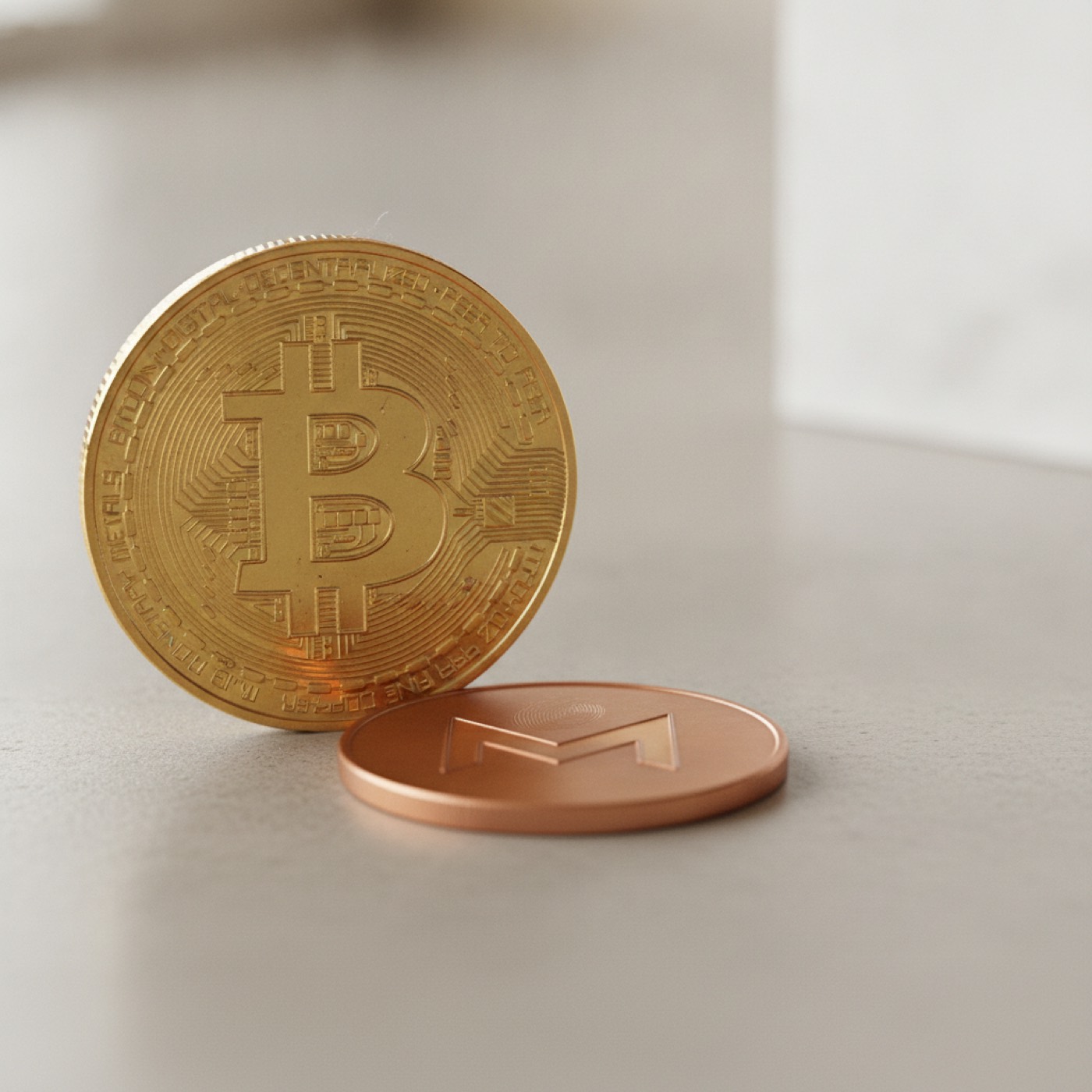
What arrives
What you're actually getting
A Monero balance behaves differently from the coins you probably already hold. Privacy isn't an add-on or a mode you switch into — it's how the chain works for every transaction. Ring signatures hide which output was really spent, stealth addresses mean the address you handed out never appears on-chain, and RingCT keeps the amounts off the public record.
The practical effect shows up fast. Once your XMR lands, nobody can pull up an explorer and read your balance. That page doesn't exist for Monero. If you want a read-only view of what's coming in, the wallet can hand out a view key, which shows incoming payments and gives away no power to spend.
So when you buy Monero, you're getting an asset whose record isn't public. That's the feature. It also means the burden of keeping track sits with you.
Where it lands
Send it to a wallet you hold the keys for
This is the part worth getting right, and it's the reason a swap suits XMR better than a platform account does. Over the past few years several large trading platforms removed XMR from their listings. Coin-to-coin swapping stepped in as the ordinary way to get the coin — and unlike an account balance, what you end up with can't be delisted out from under you.
A wallet you control has your keys. A balance on somebody's platform is a number in their database that they've promised to honour. For most coins the difference is theoretical on any given Tuesday. For a coin that keeps getting dropped from listings, it isn't.
Practical version: open your Monero wallet, copy the receiving address, paste it into the address field, then read the first four and last four characters back against the wallet screen. Do that before you send anything. An on-chain transfer is final — there's no reversal and no recovery for a typo.
Then wait out the lock
Your wallet will show the incoming amount and refuse to let you send it. Every Monero output you receive is locked for ten blocks, and blocks target two minutes, so that's roughly twenty minutes. It looks like a stuck balance and it isn't one. The rule is in the protocol, so no service can move it along for you.
Which coin to send
Pick the deposit coin by how fast it confirms
The coin you send decides the front half of the wait. Bitcoin blocks target ten minutes and services usually want at least one confirmation. Litecoin targets two and a half. Solana runs slots of about 400 milliseconds, so a SOL deposit clears almost as soon as you send it. Ethereum sits in between, with twelve-second slots.
None of that changes the back half. Monero blocks come every two minutes or so and then the ten-block lock runs regardless. If you want the whole thing over quickly, send from a fast chain — but expect the tail end to look the same either way.
One more thing about amounts: send exactly what the deposit screen asks for. A different number is a different transaction, and sorting that out takes longer than getting it right the first time.
Questions about buying XMR
Do I need an account to buy Monero this way?
No. The whole flow runs on addresses. You give the address that receives, you send the deposit from your own wallet, and the coins move on-chain. There's no login and no balance page waiting for you afterwards.
Which coin should I send to get XMR?
Whichever one you already hold. BTC, ETH, USDT, LTC and SOL all work. If speed is what you care about, send from the fastest chain you've got — the deposit confirms sooner, though the Monero side still takes its own time.
Can I send the Monero straight to another service?
You can put any valid Monero address in the field, but think about the ten-block lock first. Chaining transfers means the second one can't leave until the first output is spendable, and that's about twenty minutes of nothing happening. Sending to your own wallet first is calmer.
How do I check the XMR really arrived?
Open your wallet. That's the only place that knows. A block explorer won't show a Monero address balance, which surprises people coming from other chains. If you need proof for someone else, your wallet can produce a transaction key that verifies a specific payment.
Ready when you are
Set the amount in the box at the top, or run the default pair. Either way, have the wallet open before you send.