XMR swap: every Monero pair in one place
Pick the coin you're sending, look at the rate, then send it from your own wallet. The Monero arrives at the address you typed. No account, no upload of documents, nobody sitting on your balance.
Live pairs
Six Monero pairs and what they're worth right now
These numbers come from a public price feed, the same one the box above reads. They tell you where the market sits. They don't tell you what lands in your wallet — two network fees and the spread inside the rate do that, and you'll see the real figure before you send anything.
Five steps
How an XMR swap works
Strip away the interface and a monero swap is two ordinary transactions. You send one coin from your wallet. A different coin arrives at an address you gave. Nothing is held for you in between, and every XMR swap on this list runs the same five steps.
-
Choose a pair from the list
Choose what you're sending and what you want back, then type an amount. The figure on screen updates as you type. Treat it as the market price with the service spread already folded in, not as a promise.
-
Enter the address that receives
This is the step to slow down on. Paste the receiving address from your own wallet, then read the first and last few characters against the wallet screen. On-chain transfers are final. Send to a wrong address and there is no support ticket that brings the coins back.
-
Push the coins out of your own wallet
You get a deposit address and an amount. Send exactly that amount from the wallet you control. Nothing is signed on your behalf and no seed phrase ever leaves your device.
-
Sit through the confirmations
The deposit needs confirmations on the chain you sent from. Once it's confirmed, the second transaction goes out on the other chain. A fast sending chain shortens the front half of the wait; it can't shorten the back half.
-
Check the arrival, then let it settle
Open your wallet and look for the incoming transfer. If Monero is what arrived, the balance shows up before you can move it — every output you receive is locked for ten blocks, roughly twenty minutes, and that rule sits in the protocol itself.
Buy Monero with a coin you already hold
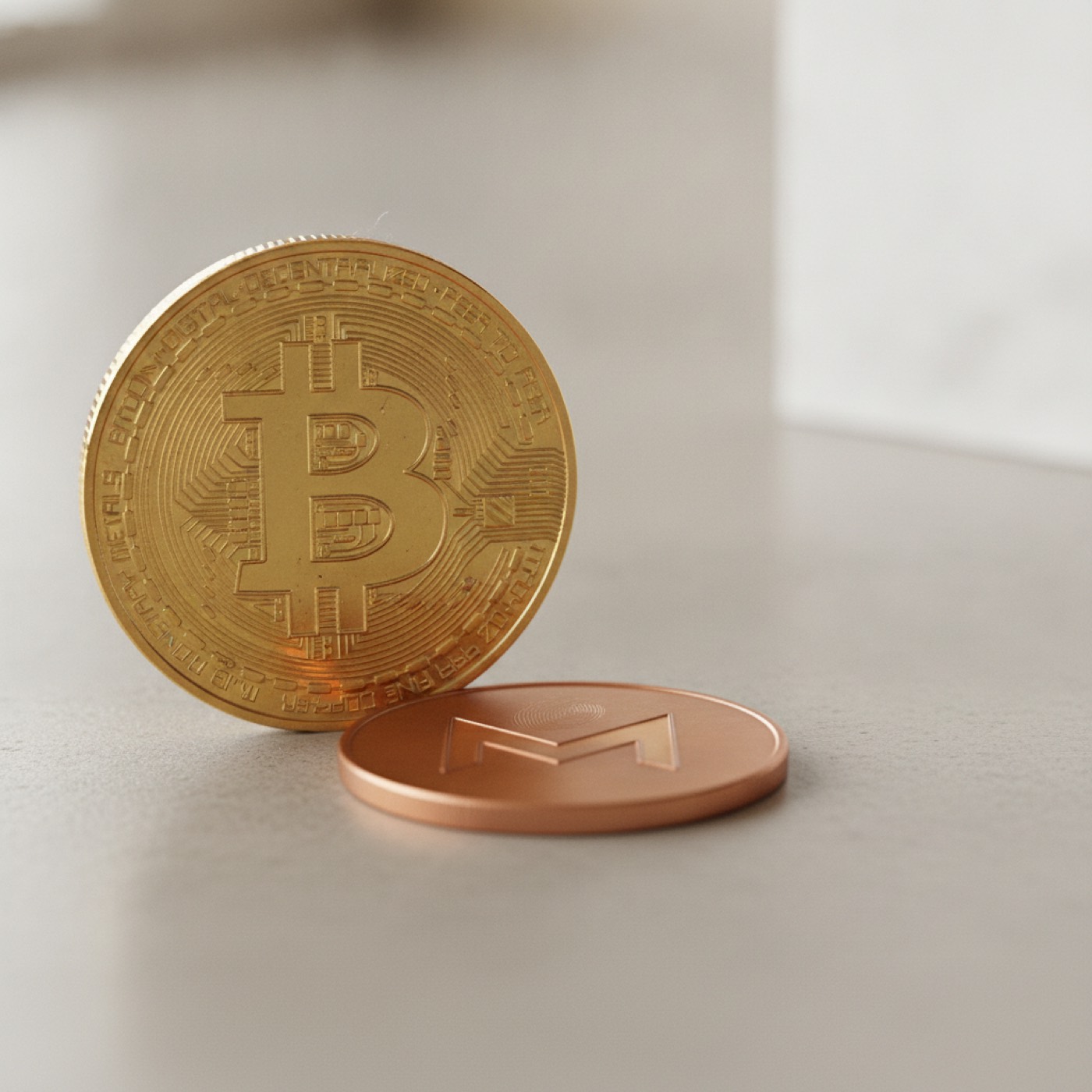
If you hold BTC, ETH, USDT, LTC or SOL, you're one transaction away from Monero. Pick the pair, give a Monero address from your own wallet, send the deposit. What comes back is a private balance you hold yourself, not a line item in someone's database.
The one thing worth checking twice is which wallet the receiving address belongs to. A wallet you hold the keys for is the right answer here, and the page below explains why that matters more for XMR than for most coins.
How to buy Monero, step by step →
Sell Monero for something you can spend
Swap XMR the other way and it's the same flow with the coins reversed. You send XMR, you get BTC, LTC, SOL or a dollar-pegged token at the address you name. People do this to lock a number in, to cover a bill, or to move value onto a chain their other tools already speak.
There's one catch that trips people up, and it has nothing to do with the service: XMR you received minutes ago can't be sent yet. Ten blocks have to pass first.
What to know before you sell Monero →Context
Why XMR is hard to buy on large platforms
Over the past few years, several large trading platforms removed XMR from their listings. That's the plain fact behind this whole page. When the usual front doors close, coin-to-coin swapping becomes the ordinary way to get the coin.
Which changes what the flow looks like. You're no longer funding an account and pressing buy. You're sending one coin from a wallet you control and receiving another in a wallet you control, with a service doing the conversion in the middle. That's a monero exchange in the practical sense, even though nothing about it resembles an order book. Run it in reverse and you exchange XMR for a mainstream coin the same way.
It also changes where your attention goes. There's no balance page to log into later, so the address you type is the whole game. Get it right and the coin is yours the moment it lands.
Money and time
Fees and timing, without the hand-waving
The XMR exchange rate on this page is a market number, not a quote, and three things stand between it and the amount that reaches your wallet. Nobody can quote you exact numbers ahead of time, because two of the three move with network conditions.
- The fee on the chain you send from. Your wallet sets it, you pay it, and it comes out before the deposit is even seen.
- The fee on the chain that pays you. It comes out of the outgoing transaction, so it shows up as a slightly smaller arrival.
- The spread baked into the rate. This is how the service earns. It's already inside the number you see, which is why the quote looks a little worse than a price chart.
Then there's a fourth thing that isn't a fee at all, and it only applies when Monero is what you receive. Every output you get is locked for ten blocks before it can be spent. Blocks target two minutes, so that's roughly twenty minutes of your balance being visible and unspendable. It isn't the service being slow and there's no fee that skips it — the rule lives in the protocol.
Fixed rate or floating rate
A fixed rate pins the number the moment you start, and you pay a bit more for that certainty. A floating rate keeps recalculating while your deposit confirms, so the final figure can drift either way. On a slow sending chain, floating has more time to drift.
| Direction | Front half of the wait | Back half |
|---|---|---|
| BTC → XMR | Bitcoin confirmations, blocks target ten minutes | Monero arrives, then ten blocks of lock |
| ETH → XMR | Slots run twelve seconds, services usually wait for a few | Monero arrives, then ten blocks of lock |
| LTC → XMR | Litecoin blocks target two and a half minutes | Monero arrives, then ten blocks of lock |
| SOL → XMR | Solana slots run about 400 milliseconds | Monero arrives, then ten blocks of lock |
| XMR → BTC | Your XMR outputs must already be spendable | One or more Bitcoin confirmations |
| XMR → SOL | Your XMR outputs must already be spendable | Lands in a slot or two |
Read that table once and the pattern is obvious. When you swap Monero out, the waiting happens up front, in your own wallet. When you swap into it, the waiting happens at the end. Either way the Monero side is the slow side, and a faster partner chain doesn't change that.
Questions
Common questions about a Monero swap
Do I need an account to exchange XMR?
No. The flow runs on addresses, not logins. You give an address that receives, you send a deposit from your own wallet, and the coins move on-chain. There's no balance page to come back to, which is also why the receiving address deserves a second look.
How long does a Monero swap take?
It depends on which side Monero is on. Sending into XMR means waiting for your deposit chain to confirm, then the Monero transaction, then ten blocks before the new balance can move. Sending XMR out skips the lock at the end but needs your existing outputs to be spendable already.
Why can't I spend XMR the moment it arrives?
Every output a Monero wallet receives is locked for ten blocks. With a two-minute block target that's about twenty minutes. Your wallet will show the amount and refuse to send it, which looks like a bug and isn't one. It's a protocol rule and no service can skip it.
Is a Monero exchange the same thing as a wallet?
No, and mixing them up is expensive. A wallet holds your keys and your coins. The exchange is a one-time conversion that pushes coins to an address you supply. Once the transfer lands, the service is out of the picture and the wallet is where your money lives.
Which coins can I swap Monero into?
The box at the top covers BTC, ETH, USDT, LTC and SOL in both directions. Pick a coin your other tools already handle, because that's usually the point of selling — getting value somewhere you can actually use it.
Can I look up my Monero balance in a block explorer?
You can't. Amounts and recipients aren't readable in the Monero chain, so there's no address page showing a balance the way there is on other chains. Your wallet is the only place that knows what you hold.
How do I prove I sent a Monero payment?
With the transaction key. Hand over that key along with the transaction id and the receiving address, and the other side can verify that particular payment went through. A view key is a different tool — it shows incoming payments to a wallet without granting any power to spend.
What sets the amount I actually receive?
The fee on the chain you send from, the fee on the chain that pays you, and the spread inside the rate. Nothing else. That's why the figure moves a little between the moment you check and the moment the deposit confirms.
Fixed or floating — which should I pick?
Fixed if you need a number you can plan around and you accept paying for it. Floating if you'd rather take the market as it comes. On a chain with slow confirmations, floating simply has more room to move before the swap settles.
Is mining still worth doing on a normal computer?
Monero's proof of work is RandomX, which was designed around ordinary processors rather than dedicated hardware. That's a design choice about who can take part, not a suggestion about what any machine will produce. Tail emission pays 0.6 XMR per block.
Ready to swap XMR?
Every XMR swap starts the same way: the pair box at the top of the page, or a straight run with Bitcoin in and Monero out. Have the receiving address open in your wallet before you start.